
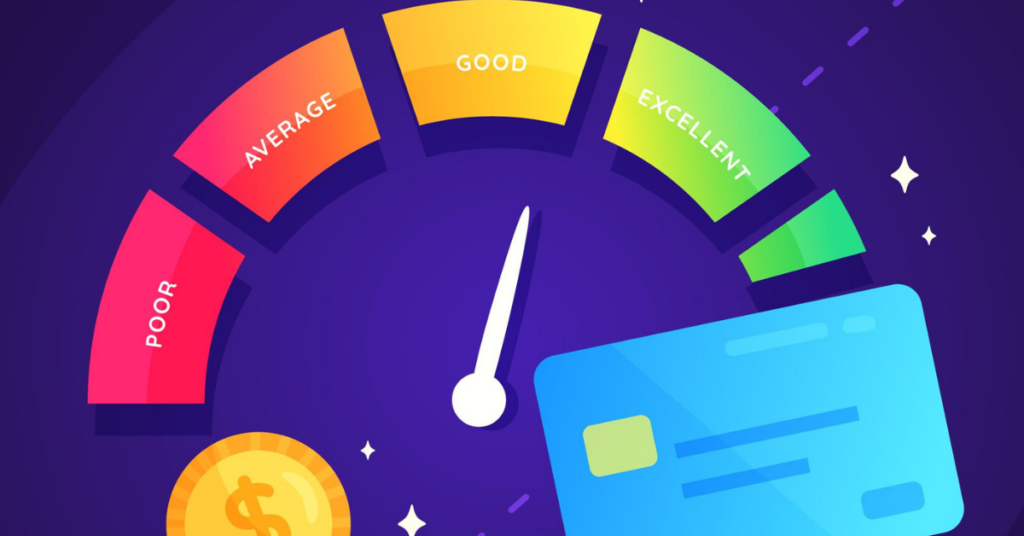
The Mechanics of Modern Credit Assessment
The bridge between a borrower’s aspirations and the capital required to achieve them is built upon a foundation of data. Lending institutions no longer rely on subjective handshakes; instead, they utilize sophisticated algorithmic models to predict the probability of repayment. At the center of this ecosystem is the FICO Score, a three-digit number ranging from 300 to 850 that serves as a universal language for risk. This score is generated by the Fair Isaac Corporation and is utilized by the vast majority of lenders to make instantaneous decisions regarding creditworthiness.
While several scoring models exist, including VantageScore, the influence of the traditional model remains dominant in mortgage and auto lending. A high score signals to the lender that the applicant is a low-risk borrower, which often translates into lower interest rates and higher credit limits. Conversely, a lower score suggests a history of financial instability or lack of experience, prompting lenders to either decline the application or mitigate their risk by charging a premium in the form of elevated interest. Understanding that this number is a dynamic reflection of one's financial behavior—rather than a static grade—is the first step toward strategic financial management.
The Core Components of Borrowing Power
To understand how a score is constructed, one must look at the specific behaviors that data scientists track. The weighting of these factors is designed to reward consistency and penalize volatility.
Reliability and Payment History
The most significant factor in any credit evaluation is Payment History, accounting for approximately 35% of a total score. This metric tracks whether a borrower has paid their past credit accounts on time. It includes credit cards, retail accounts, installment loans, and mortgages. Even a single 30-day delinquency can have a substantial negative effect on an otherwise pristine profile. Lenders view past behavior as the most reliable predictor of future performance. For those seeking to optimize their eligibility, maintaining a flawless record of on-time payments is non-negotiable.
Balance Management and Credit Utilization
Following closely in importance is the concept of Credit Utilization, which represents about 30% of the scoring calculation. This ratio is determined by dividing the total outstanding balances on revolving credit lines by the total available credit limits. For example, if a borrower has a total limit of $10,000 and carries a balance of $3,000, their utilization is 30%. Financial experts generally advise keeping this ratio below 30%, though the highest scorers often maintain a ratio in the single digits. High utilization suggests to a lender that a borrower may be overextended and reliant on debt to manage daily expenses, even if they are making all payments on time.
Financial Capacity and Verification Processes
A high credit score is a necessary gateway, but it is not the only requirement for loan approval. Lenders must also ensure that the borrower has the "capacity" to take on new debt based on their current cash flow.
The Necessity of Income Verification
Before a loan is finalized, lenders initiate a rigorous Income Verification process. This step confirms that the applicant has a steady and sufficient stream of revenue to meet the new monthly obligations. For W-2 employees, this typically involves providing recent pay stubs and W-2 forms. For the self-employed or those with non-traditional income streams, the process is more intensive, often requiring two years of federal tax returns and profit-and-loss statements. Lenders are looking for "effective income"—earnings that are documented, stable, and likely to continue for the foreseeable future.
Analyzing the Debt-to-Income Ratio (DTI)
Once income is verified, it is compared against existing liabilities to determine the Debt-to-Income Ratio. This is a critical metric used to measure a borrower's ability to manage monthly payments and repay debts. It is calculated by adding up all monthly debt payments (including the projected new loan payment) and dividing that sum by the gross monthly income.
Most conventional mortgage lenders prefer a DTI ratio of 43% or lower, though some specialized programs allow for higher thresholds. There are two types of DTI: the "front-end ratio," which only considers housing-related expenses, and the "back-end ratio," which includes all recurring debts like student loans, car payments, and credit card minimums. A low DTI indicates a healthy balance between debt and income, giving the lender confidence that the borrower can weather a financial emergency without defaulting.
Behavioral Factors and Score Impact
The act of applying for credit itself leaves a footprint on a financial profile. It is essential to distinguish between different types of inquiries and their subsequent Score Impact.
A "soft inquiry" occurs when a credit report is checked for non-lending purposes—such as an employer background check or a pre-approved credit card offer. These have no effect on the score. A "hard inquiry," however, occurs when a lender reviews a report to make a lending decision. A hard inquiry can cause a temporary dip in a score, typically by five points or less. While a single inquiry is minor, multiple hard inquiries in a short period can signal "credit hunger," suggesting that the borrower is in a desperate financial situation.
The longevity of one's credit history also plays a role. Closing an old account might seem like a way to simplify one's life, but it can actually lower a score by reducing the average age of accounts and decreasing the total available credit. Strategic borrowers keep their oldest accounts open and active to demonstrate a long-term commitment to responsible credit management.
The Strategic Importance of Credit Diversity
Lenders also look for a "credit mix," which refers to the different types of accounts a borrower holds. A profile that includes both revolving credit (cards) and installment loans (mortgages, auto loans) is generally viewed as more robust than one that only contains credit cards. This diversity proves that the individual can manage different types of repayment structures and interest calculations simultaneously. While one should never take out a loan just for the sake of "mix," understanding its role can help in making long-term decisions about which debts to pay off first and which to keep active.
Questions and Answers regarding Financial Assessments
How does a specific FICO Score version differ from the general score often shown in banking apps?
Banking applications often provide a VantageScore or a generalized educational score to give users a sense of their standing. However, mortgage lenders typically use older, specific versions of the scoring model tailored for long-term housing risk. There are dozens of variations; for instance, an auto lender might use a version that emphasizes past car payment history more heavily than a general credit card issuer would. It is common for a borrower to see a difference of 20 to 50 points between an educational score and the specific model used for a significant loan application.
Can a high Credit Utilization on a single card hurt a score even if the total utilization across all cards is low?
Yes, scoring models look at utilization in two ways: per-card and aggregate. Even if a borrower has $50,000 in total limits and only $5,000 in total debt (10% aggregate utilization), having a single card with a $2,000 limit maxed out at $1,900 can trigger a negative impact. Lenders view "maxed-out" individual accounts as a sign of localized financial stress. To maximize a score, it is more effective to spread smaller balances across multiple cards than to concentrate a large balance on one.
What is the long-term Score Impact of closing a credit card account that I no longer use?
Closing an account has a two-fold negative effect. First, it immediately reduces the total available credit, which can cause the utilization ratio to spike if there are balances on other cards. Second, while the closed account will stay on the report for ten years for positive history, it eventually drops off, which can shorten the "age of credit history." Unless an account has an expensive annual fee that provides no value, it is usually strategically better to keep the account open and put a small recurring charge on it once a year to keep it from being deactivated by the issuer.
Maintaining Eligibility in a Shifting Market
The lending environment is constantly evolving, with institutions adjusting their risk tolerances based on broader economic conditions. However, the fundamentals of borrowing eligibility remain rooted in the principles of stability and predictability. By viewing a credit profile as a long-term asset rather than a short-term obstacle, individuals can position themselves to take advantage of opportunities when they arise.
The most effective way to ensure ongoing eligibility is to conduct regular self-audits. This involves reviewing credit reports for inaccuracies, proactively managing debt levels, and avoiding large, new financial commitments in the months leading up to a major loan application. In a world where access to capital determines the ability to invest and grow, mastering the nuances of credit scoring is one of the most valuable forms of financial literacy an individual can acquire.