
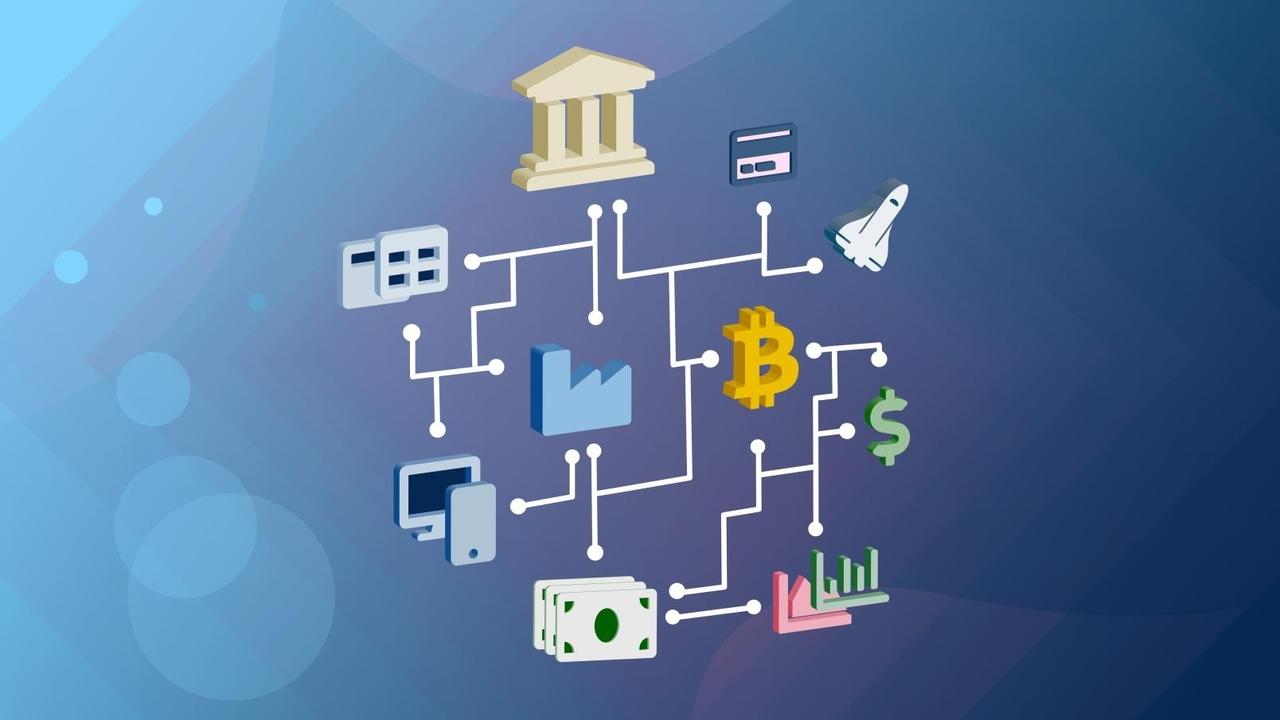
Decentralized Indexes vs. Traditional ETFs: A Comparative Exploration
As the financial landscape evolves, investors are increasingly looking beyond standard products. The emergence of blockchain technology has introduced a fascinating alternative to the classic Exchange Traded Fund (ETF), offering a new way to access diversified markets through automated code rather than human management.
1. From Human Custody to Smart Contract Autonomy
The most distinct difference lies in how these funds are managed and secured. Traditional ETFs rely on a complex web of centralized intermediaries, including custodians, fund managers, and clearinghouses, to hold assets and balance the portfolio. While this system offers regulatory familiarity, it introduces layers of fees and potential points of failure.
In contrast, decentralized indexes operate on "trustless" architecture. Instead of a bank holding the underlying assets, smart contracts—self-executing code on the blockchain—manage the custody and rebalancing processes automatically. This innovation allows for significant efficiency, as the software autonomously executes rules without the need for manual intervention or third-party approval. For investors, this means the potential for lower operational costs and a system where the "rules of the game" are hard-coded and immutable, reducing the risk of human error or mismanagement.
2. Radical Transparency and Global Accessibility
Transparency is another area where the divergence is stark. With a traditional ETF, investors typically have to wait for monthly or quarterly reports to see the exact breakdown of the fund's holdings. There is always a lag between the fund's actual state and the information available to the public.
Decentralized indexes flip this dynamic by utilizing on-chain verification. Because the product exists on a public ledger, anyone can audit the collateral and portfolio composition in real-time, 24/7. This level of visibility ensures that the fund's performance matches its stated strategy without relying on blind trust. Furthermore, these on-chain products are permissionless, meaning they are accessible to anyone with an internet connection, bypassing the geographic restrictions and banking requirements that often limit access to traditional financial markets. This opens up diversified investment opportunities to a truly global audience.
Harnessing Blockchain for Dynamic Crypto Market Index Tracking
The landscape of investment is undergoing a seismic shift, moving away from static, manual portfolio management toward a new era of automated, transparent, and efficient mechanisms. As blockchain technology matures, it is unlocking novel ways to track market performance that go far beyond simple price speculation. By leveraging decentralized networks and programmable logic, investors can now access dynamic market exposure that operates 24/7, free from the bottlenecks of traditional finance. This evolution represents a fundamental change in how value is indexed, captured, and managed in the digital age.
1. The Evolution of Smart Contract-Governed Portfolios
The transition from traditional equity benchmarks to on-chain investment vehicles is redefining what it means to hold a diversified portfolio. Historically, investors looking for exposure to the digital asset industry had to rely on proxy stocks—such as major semiconductor firms or centralized exchanges—often bundled into standard global indexes. While these traditional benchmarks provide some insight, they fail to capture the real-time velocity and true decentralized nature of the crypto ecosystem. Today, smart contract-governed indexes are stepping in to fill this gap, offering a method of tracking that is not only automated but also intrinsically transparent. Unlike their traditional counterparts, which may suffer from rebalancing delays and opacity, blockchain-based indexes utilize self-executing code to adjust holdings based on pre-set parameters, ensuring that the fund always reflects the current state of the market without human intervention.
This shift toward decentralization allows for the creation of "trustless" portfolios. In this model, the rules of the index—such as asset allocation, weighting logic, and rebalancing frequency—are written directly into the blockchain. This eliminates the need for centralized custodians to manually approve trades, significantly reducing counterparty risk. Furthermore, recent data indicates a massive surge in the tokenization of real-world assets (RWAs), with volumes expanding by billions of dollars in a short period. This influx of tokenized value provides the raw material for even more sophisticated decentralized indexes. By integrating these stable, asset-backed tokens alongside volatile crypto assets, smart contracts can construct balanced portfolios that offer programmatic scarcity and diversified exposure. This capability positions decentralized indexes not just as speculative tools, but as robust financial instruments capable of rivaling, and perhaps eventually superseding, the rigid structures of traditional finance.
2. Institutional Adoption and the Rise of AI-Enhanced Indices
As the infrastructure for decentralized finance matures, the market is witnessing a distinct "institutional era" where sophistication is becoming the new standard. The primitive days of simply holding a single major cryptocurrency are giving way to complex, sector-specific strategies. Recent market analysis highlights the growing popularity of specialized trackers, such as those focusing solely on smart contract platforms, privacy-preserving protocols, or decentralized lending ecosystems. This granular approach allows institutional capital to flow into specific verticals rather than the market as a whole. Driving this trend is the integration of Artificial Intelligence (AI) with blockchain technology. New AI-driven indices are emerging that can analyze vast amounts of on-chain data to optimize portfolios in real-time, offering a level of responsiveness that manual management simply cannot match. These intelligent protocols can detect volatility spikes or sector rotations instantly, adjusting the index composition to mitigate risk or capture emerging growth.
The economic efficiency of these blockchain-based products is also becoming a major draw for large-scale investors. This price sensitivity, combined with the operational benefits of immediate settlement and liquidity, is accelerating the migration of capital from traditional funds to decentralized alternatives. Moreover, the explosion of activity in decentralized perpetual exchanges—which now command a significant portion of total trading volume—demonstrates a growing appetite for sophisticated hedging tools governed entirely by code. As liquidity deepens and stablecoin supplies hit record highs, the ecosystem is primed to support these dynamic index products, offering investors a seamless blend of transparency, efficiency, and automated performance tracking that was previously impossible.
| Scenario | Decentralized Indexes | Traditional ETFs |
|---|---|---|
| Volatile Market Conditions | Real-time adjustments with AI | Delayed manual rebalancing |
| Global Market Access | 24/7 trading, no borders | Limited by market hours and regulations |
| Cost Efficiency | Lower fees due to automation | Higher fees due to management and regulatory costs |
| Portfolio Management | Automated, data-driven | Manual, manager-driven |
Benefits and Challenges of Adopting Decentralized Exchange Indexes
The landscape of asset management is undergoing a profound transformation as blockchain technology begins to reshape how market exposure is acquired and managed. We are witnessing a shift where institutional focus moves beyond simple asset holding toward sophisticated, programmable baskets of assets. Decentralized exchange indexes are emerging as a powerful alternative to traditional exchange-traded funds (ETFs), offering a dynamic way to track market sectors ranging from smart contract platforms to tokenized real-world assets. As capital flows increasingly migrate on-chain, understanding the distinct advantages and operational hurdles of these smart contract-governed products becomes essential for modern investors.
1. The Era of Programmable Liquidity and Transparency
The primary allure of decentralized indexes lies in their ability to offer continuous, trustless operation that traditional finance cannot match. Unlike conventional funds that rely on banking hours and intermediary settlements, blockchain-based index products operate 24/7, allowing for instant execution and settlement. Recent market analysis highlights a surge in institutional adoption of these tools, driven by the desire for "programmatic scarcity" and automated portfolio management. By utilizing smart contracts, these indexes can automatically rebalance holdings based on pre-set parameters without human intervention, ensuring that the fund constantly reflects the true state of the market or a specific sector strategy, such as privacy-focused assets or AI-related tokens.
2. Navigating Technical Friction and Regulatory Uncertainty
Despite the compelling advantages of on-chain asset management, the path to widespread adoption is paved with significant challenges that require careful navigation. One of the most persistent issues facing decentralized index funds is the technical complexity associated with execution and cost. Executing a rebalancing strategy for a diversified portfolio on a blockchain involves multiple transactions, which can incur substantial "gas" fees during periods of network congestion. While Layer-2 scaling solutions are alleviating some of this pressure, the cost of maintaining a perfectly weighted index on-chain remains higher than the virtually zero-cost internal adjustments of centralized databases used by traditional ETF providers. Additionally, liquidity fragmentation across various decentralized exchanges (DEXs) can lead to price slippage, making it difficult for an index to perfectly track its underlying benchmark without sophisticated aggregation tools.
Smart Contracts in Cryptocurrency Investments: Revolutionizing Portfolio Management
The landscape of digital finance is changing rapidly, moving away from reliance on traditional intermediaries and toward more autonomous solutions. At the heart of this transformation are smart contracts, which serve as the engine for decentralized index funds. Instead of depending on a manager to manually select and trade assets, code now handles these complex tasks, ensuring greater transparency and efficiency for every investor. This shift is redefining how we approach portfolio growth.
1. The Power of Automation and Enhanced Security
We are witnessing a significant shift where software effectively replaces the middleman. By utilizing self-executing code, decentralized funds automatically rebalance portfolios using real-time data. This is not merely about speed; it is fundamentally about safety. The industry is actively adopting non-custodial models where you retain control of your assets through multi-signature wallets. Trends indicate that a majority of stablecoin volume is now driven by these automated interactions, proving that investors are increasingly comfortable with programmable money.
2. Diversification and Real-World Integration
Beyond simply holding popular coins, these smart systems allow for sophisticated diversification. Imagine an index that automatically tracks high-performing sectors like artificial intelligence or privacy protocols without you lifting a finger. Furthermore, a bridge is forming between digital and physical value. Through tokenization, real-world assets are entering the blockchain, creating low-correlation opportunities. This evolution transforms passive income strategies, allowing for fractional ownership of assets previously out of reach.
Q&A
Q1: How do decentralized indexes differ from traditional ETFs in terms of management and security?
A1: Decentralized indexes are managed through smart contracts on the blockchain, which automatically handle asset custody and portfolio rebalancing without human intervention. In contrast, traditional ETFs rely on centralized intermediaries like fund managers and custodians, which can add layers of fees and potential failure points.
Q2: What are some key benefits of decentralized indexes over traditional financial products?
A2: Decentralized indexes offer radical transparency by allowing real-time auditing of assets on a public ledger, eliminating the lag between current portfolio composition and investor information. They also provide global accessibility and lower operational costs due to automation via smart contracts, which execute rules without third-party approval.
Q3: How do decentralized index funds enhance investment transparency and accessibility?
A3: Unlike traditional ETFs, which provide delayed portfolio updates, decentralized indexes allow for 24/7 real-time auditing of holdings through on-chain verification. This ensures constant transparency and allows global investors to participate without geographic or banking restrictions.
Q4: What are some advantages of decentralized indexes in the realm of continuous operation and portfolio management?
A4: Decentralized indexes operate 24/7 and automatically rebalance using smart contracts, offering continuous operation and reflection of market states without the need for intermediary intervention. This "trustless" mechanism ensures real-time market response and programmatic liquidity, unavailable in traditional funds.
Q5: What technical and regulatory challenges do decentralized indexes face?
A5: Decentralized indexes encounter technical challenges like high transaction fees during network congestion and liquidity fragmentation leading to price slippage. They also face regulatory hurdles due to their permissionless nature potentially conflicting with global AML and KYC standards.