
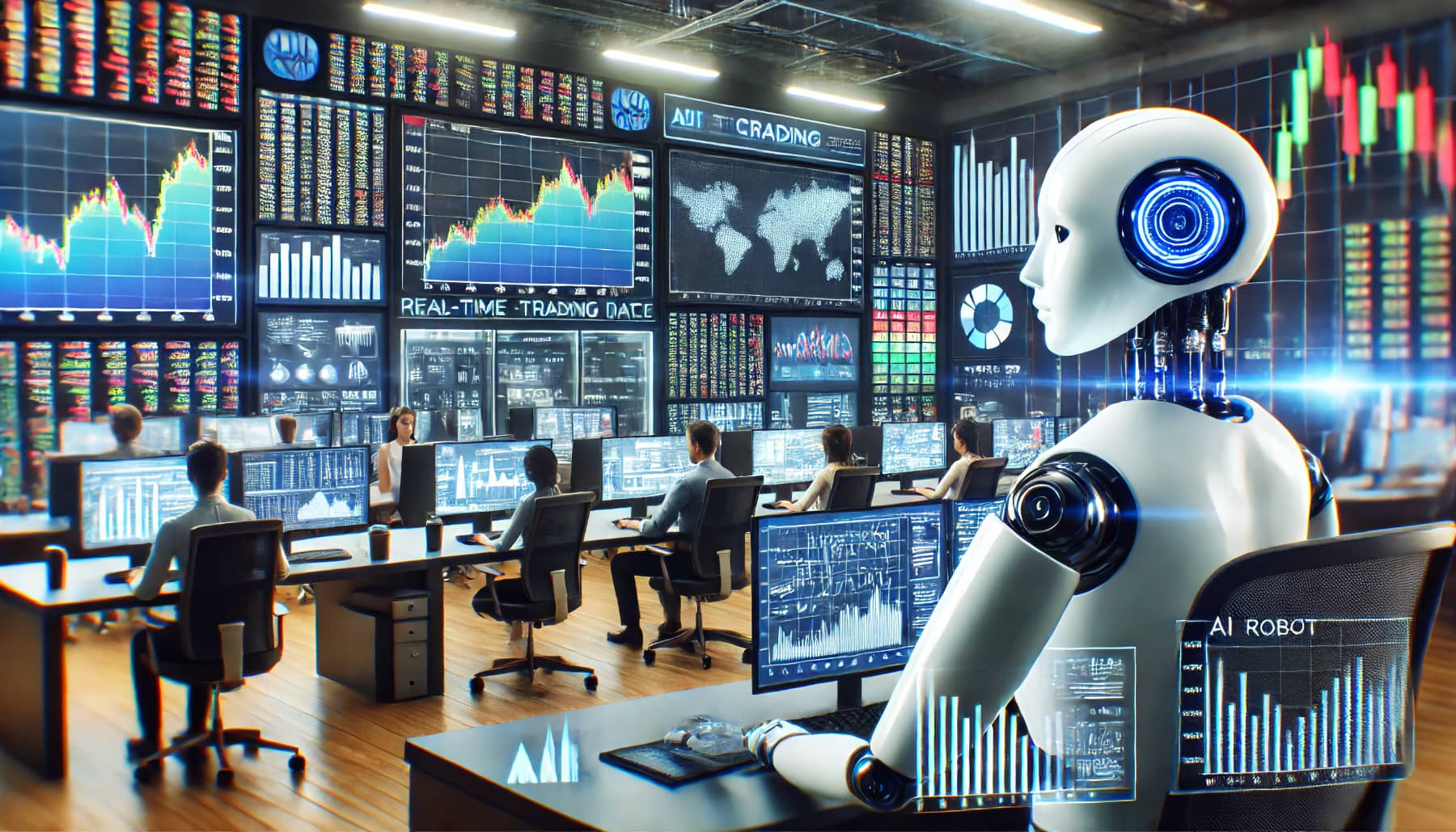
The Structural Shift in Capital Allocation and Sector Analysis
From Infrastructure Hype to Utility-Driven Value
The current narrative surrounding financial markets is dominated by a projection of explosive growth, driven largely by technological innovation. Expert analysis suggests that market valuations, once measured in the billions, are on a trajectory to expand into the trillions over the coming decade. However, for the astute investor, the most compelling aspect of this growth is not the sheer size of the numbers, but the fundamental shift in their composition. We are witnessing a transition from a hardware-centric investment cycle—focused on building the physical rails of computation—toward a software and service-oriented ecosystem. While the initial phase was defined by the race to construct data centers and manufacture chips, the next phase will likely be defined by the companies that can effectively monetize these capabilities through practical applications.
This shift is particularly visible in the rise of "vertical" or industry-specific solutions. Unlike the previous era of general-purpose software that aimed to serve every business vaguely, the new wave of capital is flowing into highly specialized tools designed for sectors like healthcare, automotive, and finance. This is often referred to as "frontier technology," where legacy industries are structurally transformed by integrating advanced computational power. For an equity portfolio, this means a narrow focus on the technology sector is no longer sufficient. One must adopt a panoramic view, identifying how traditional industries are re-rating as they evolve into tech-enabled service providers. The companies poised for the most durable growth are those embedding themselves deeply into the operational workflows of specific industries, moving beyond mere efficiency tools to become critical, revenue-generating infrastructure for their clients.
Deciphering the Capex Boom and Financial Health
To navigate this complex landscape, one must look beyond the hype and scrutinize the "plumbing" of corporate finance—specifically, capital expenditure (Capex) and debt issuance. Currently, there is an unprecedented acceleration in investment toward computational resources and energy infrastructure. Major technology firms are borrowing at historical levels, signaling a highly aggressive stance toward future growth. When the ratio of investment to total economic activity spikes, it typically indicates that a technology is not merely a passing trend but is reshaping the societal infrastructure, much like the rollout of electricity or telecommunications networks in the past.
However, this capital intensity introduces a bifurcation in risk assessment. Comparisons to past market bubbles are inevitable when spending disconnects from immediate cash flow. The crucial analytical task for investors is distinguishing between "visionary investment" and "overheating." There is a fine line between building necessary capacity for a digital future and creating an oversupply of expensive assets that may face rapid obsolescence. The speed of technological evolution means that a billion-dollar facility built today could be outdated within a few years. Therefore, analyzing a company’s return on invested capital (ROIC) becomes more important than simply chasing revenue growth. Investors must evaluate whether the massive costs of maintaining data infrastructure will eventually yield proportionate returns, or if they represent a financial burden that will drag down balance sheets once the initial enthusiasm fades.
Decoding Market Psychology Through Advanced Analytics
Quantifying Investor Emotions and Corporate Tone
Historically, market forecasting relied almost exclusively on structured data: balance sheets, P/L statements, and macroeconomic indicators. Today, the frontier of analysis has expanded to include the vast ocean of unstructured text data, processing the "sentiment" or mood of the market. By utilizing natural language processing, systems can now parse millions of news articles, social media posts, and analyst reports to assign a quantifiable score to market optimism or pessimism. This allows the intangible "atmosphere" of the market—once the domain of a veteran trader's gut instinct—to be treated as a rigorous, calculable input in investment models.
A particularly potent application of this technology is the analysis of corporate communication. Algorithms are now deployed to listen to earnings calls and read executive statements, not just for the facts presented, but for the nuance of the language used. These systems detect hesitation, confidence, deflection, or uncertainty in a CEO's voice or phrasing. Research indicates that these subtle linguistic cues often precede official financial revisions or stock price corrections. By combining these "soft" signals with "hard" financial data, investors can achieve a higher degree of predictive accuracy. However, this approach requires a disciplined filter. The noise-to-signal ratio in social sentiment is high; a viral trend on social media does not always equate to long-term enterprise value. The goal is not to react to every spike in online activity, but to identify sustained shifts in narrative that drive capital flows between sectors.
Advanced Architectures and Risk Mitigation
Neural Networks and the Democratization of Inference
The capability to sift through market noise and identify actionable patterns is being significantly enhanced by neural network architectures. These systems, designed to mimic the layered structure of biological neurons, excel at identifying non-linear relationships that traditional statistical methods often miss. Through a process known as backpropagation, these models continuously refine their internal weighting systems by comparing their predictions against actual outcomes, effectively "learning" from their errors. This allows for the detection of subtle correlations across asset classes that would be invisible to human analysis, providing a more objective basis for decision-making in volatile environments.
Furthermore, the physical infrastructure supporting these insights is shifting from centralized data centers to the "edge." This evolution means that data analysis occurs closer to the source—such as on factory floors or within logistics networks—allowing for real-time inference. For investors, this reduces the reliance on lagging indicators like quarterly reports. Instead, the health of a company can be inferred from real-time operational data. As these sophisticated inference models become accessible via APIs, the playing field is leveling. Capabilities that once required a supercomputer are becoming utility-like resources, allowing a broader range of investors to focus on strategy and interpretation rather than the heavy lifting of model construction.
Stress Testing and Removing Emotional Bias
Perhaps the most valuable contribution of these advanced systems lies in risk management and the neutralization of behavioral bias. Traditional risk assessment often relies on historical volatility, assuming the future will resemble the past. In contrast, modern computational models excel at simulation, running thousands of "stress scenarios" to predict how a portfolio would react to unprecedented economic shocks. This allows investors to identify fragility in their asset allocation before a crisis occurs, acting as a digital barometer for oncoming storms.
Moreover, the greatest risk to capital preservation is often the investor's own psychology—panic selling at the bottom or buying into euphoria at the top. Data-driven models operate without fear or greed. They adhere strictly to probability and predefined rules, maintaining discipline when human emotion would otherwise dictate a deviation from strategy. By offloading the execution of risk protocols to these systems, investors can ensure that their decisions are consistent and anchored in logic, regardless of the chaos in the broader market.
| Comparison Point | Traditional Risk Management | AI-Enhanced Scenario Simulation |
|---|---|---|
| Data Basis | Relies primarily on historical price volatility and past correlations. | Utilizes generated synthetic data to simulate unprecedented events. |
| Reaction Speed | Reactive; adjustments often made after a trend is established. | Proactive; adjusts positions based on probability shifts and early warning signals. |
| Blind Spots | Often misses "Black Swan" events that haven't occurred in the dataset. | Can test for hypothetical "worst-case" scenarios outside of historical norms. |
| Decision Driver | Human judgment influenced by recent market memory. | Automated logic based on statistical resilience and drawdown limits. |
Q&A
-
What are the benefits of using Machine Learning for Stock Picks?
Machine Learning for stock picks provides the ability to analyze vast amounts of data quickly and accurately, identifying patterns and trends that might be missed by human analysts. It can process historical stock data, social media sentiment, and market news to make informed predictions, leading to more effective investment strategies and potentially higher returns.
-
How does Neural Network Forecasting improve stock market predictions?
Neural Network Forecasting enhances stock market predictions by learning from complex data sets and identifying non-linear relationships within the market. This approach adapts to new data, improving its predictive accuracy over time. Neural networks can model intricate market dynamics, offering insights that traditional models may not capture.
-
What role do Sentiment Analysis Algorithms play in financial markets?
Sentiment Analysis Algorithms analyze textual data from news articles, social media, and financial reports to gauge market sentiment. By understanding the prevailing mood or opinions regarding a particular stock or the market as a whole, these algorithms can predict potential market movements, helping investors make more informed decisions.
-
What is Predictive Market Modeling, and how is it applied?
Predictive Market Modeling involves using statistical techniques and algorithms to forecast future market trends. This approach combines historical data, market indicators, and predictive analytics to simulate various market scenarios. It is applied in risk management, portfolio optimization, and developing trading strategies, providing investors with a competitive edge.
-
How do Algorithmic Trend Detection and Deep Learning Price Prediction work together?
Algorithmic Trend Detection identifies significant trends and patterns within market data, while Deep Learning Price Prediction uses these insights to forecast future price movements. Together, they enable more precise and reliable predictions by combining real-time trend analysis with advanced predictive modeling, allowing for timely and strategic investment decisions.