
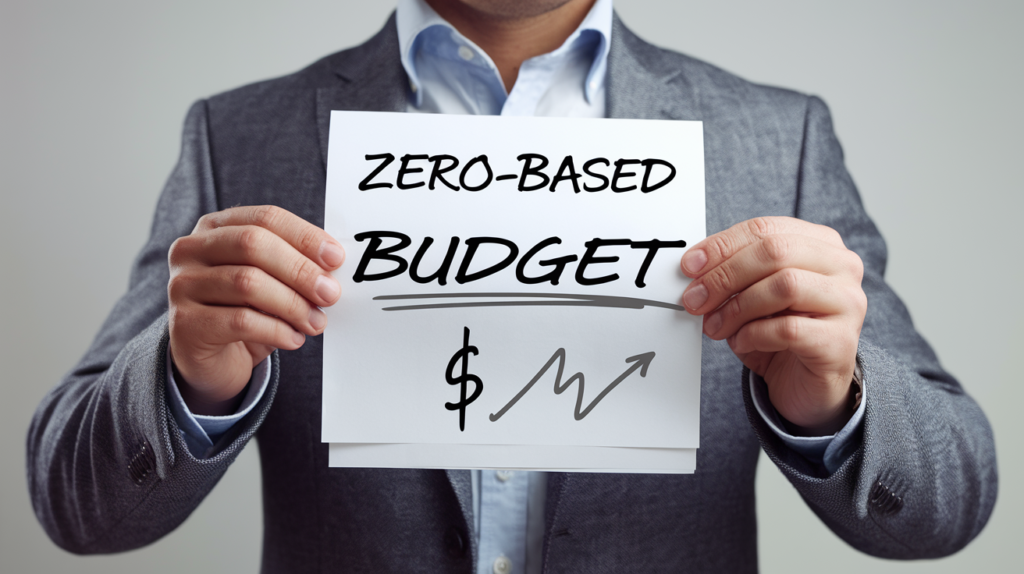
Decoding Zero-Based Budgeting: A Revolutionary Approach to Financial Planning
1. Giving Every Dollar a Purpose
Have you ever reached the end of the month and wondered where all your hard-earned money actually went? The core philosophy behind zero-based budgeting offers a refreshing solution to this common dilemma. The concept is remarkably simple yet transformative: every single dollar you earn is assigned a specific job before the month even begins. Unlike traditional methods where you might loosely track your spending or leave leftover funds unallocated, this approach ensures that your total income minus your expenses equals exactly zero. This does not mean your bank account is empty; rather, it signifies that every penny—whether it is allocated for housing, utilities, or your retirement fund—has a designated place. By shifting your mindset from simply monitoring cash flow to actively directing it, you gain a sense of clarity and control that turns vague financial anxiety into a structured plan for success.
2. The Power of Intentional Justification
What truly sets this method apart is the requirement to justify your expenses from scratch for each new period. Instead of automatically copying the previous month's budget, you evaluate your current needs and goals anew. This process fosters a deep sense of intentionality, forcing you to ask whether a purchase truly aligns with your priorities. It creates a flexible environment where accountability is paramount; if you overspend in one category, such as dining out, you must actively reallocate funds from another area to maintain the balance. This prevents financial drift and encourages smarter spending habits. While it requires a bit more upfront effort, the payoff is substantial. With the help of modern apps that automate the heavy lifting, maintaining this level of precision has become easier than ever, allowing you to build wealth with purpose and adaptability.
| Comparison of Budgeting Methods | Traditional Budgeting | Zero-Based Budgeting |
|---|---|---|
| Approach | Often uses past spending as a template | Starts from zero each month |
| Flexibility | Less adaptable to changing goals | Adjusts to current needs and priorities |
| Accountability | May overlook some expenses | Requires justification for every expense |
| Effort Required | Generally less intensive | Requires detailed planning and tracking |
Kickstart Your Financial Journey: A Step-by-Step Guide to Zero-Based Budgeting
1. Embracing the Zero-Based Mindset
Adopting zero-based budgeting requires a fundamental shift in how you view your resources. Instead of simply adjusting last month's figures, this method demands that you justify every expense from scratch for each new period. The goal is to ensure that your total income minus your total expenses equals exactly zero, meaning every dollar is purposefully assigned a role. This rigorous process significantly enhances spending accountability, preventing money from slipping away unnoticed. By proactively managing income assignment, you can eliminate wasteful habits and achieve greater money efficiency, ensuring your hard-earned cash is working toward your specific life goals rather than vanishing into the void of unplanned spending.
2. Structuring Essentials and Goals
Creating a resilient financial structure starts by prioritizing your absolute necessities before considering discretionary spending. This approach improves budget accuracy by locking in funds for survival first. As illustrated in the breakdown below, placing a premium on housing and food stabilizes your financial foundation.
Once these critical categories are funded, you gain the clarity needed to direct remaining resources toward savings. This prioritization ensures you are not only surviving but also actively building a safety net for the future.
Real-Life Scenarios: How Zero-Based Budgeting Transforms Household Finances
Gaining control over household expenses often feels like a daunting task, but adopting a proactive financial strategy can change everything. By shifting from passive tracking to active management, you can ensure that every decision moves you closer to your financial goals.
1. The Power of Intentional Assignment
Zero-based budgeting fundamentally transforms financial management by ensuring that every dollar of income is assigned a specific purpose. The core philosophy is distinct and rigorous: at the end of the month, your total income minus your total expenses must result in a monthly balance of exactly zero. This does not mean spending every penny you earn; rather, it promotes intentional spending by verifying that every unit of currency has a designated role, whether it is covering bills or building savings. This method eliminates waste by requiring a fresh start each month rather than simply carrying over previous figures. By forcing you to justify every expense anew, it fosters a high level of financial accountability and enhances precision in tracking expenses.
2. A Scalable Framework for Families
In practical application, a household might allocate a specific monthly income across distinct categories to ensure no capital remains unassigned. Essential priorities often include mortgage payments, retirement contributions, and aggressive debt repayment. To ensure stability, families also allocate funds to build emergency buffers for unexpected costs. This approach is scalable across different income levels and can be effectively integrated with frameworks like the 50/30/20 rule to balance necessities, personal wants, and savings goals. By prioritizing high-impact areas like debt elimination, this strategy not only organizes daily finances but also drives long-term savings growth.
| Financial Planning Scenarios | Traditional Approach | Zero-Based Approach |
|---|---|---|
| Budgeting Focus | Past spending trends | Current needs and goals |
| Expense Justification | Often minimal | Required each period |
| Flexibility with Income Changes | Limited | Highly adaptable |
| Long-Term Goal Alignment | Less clear | Directly tied to each dollar's purpose |
The Balancing Act: Advantages and Challenges of Adopting Zero-Based Budgeting
Managing personal finances can sometimes feel like walking a tightrope, trying to keep everything steady without falling off. One method that often comes up in conversation when discussing rigorous financial health is zero-based budgeting. It is a strategy that promises total control over your money, but is it the right fit for everyone? Let’s explore how this distinct approach works and weigh the real-world pros and cons.
1. Taking Control of Every Dollar
At its core, zero-based budgeting is about giving every single dollar a specific job to do. Instead of simply wondering where your money went at the end of the month, you proactively assign your income to expenses, savings, or debt repayment until you reach exactly zero. This method significantly boosts spending accountability because it forces you to justify every expense before you actually make it. By deeply analyzing your financial structure in this way, you naturally eliminate waste and redirect resources toward high-priority goals. It turns abstract financial wishes into concrete plans, ensuring true money efficiency. When you track things this closely, your budget accuracy often improves, helping you spot hidden leaks in your finances that traditional methods might miss.
2. Weighing the Effort Against the Reward
While the benefits of total control are clear, this rigorous approach is not without its hurdles. The biggest challenge for many is the significant time commitment required to make it work. Building a plan from scratch demands detailed planning and continuous tracking, which can feel incredibly tedious if you are not naturally detail-oriented. It requires a mindset shift where you must constantly monitor your cash flow rather than setting it on autopilot. Additionally, if your earnings fluctuate, maintaining a perfect zero-balance plan can be tricky and requires frequent adjustments to your categories. However, for those willing to put in the necessary diligence, the improved financial awareness is often worth the initial struggle. It is less about restriction and more about understanding the true cost of your lifestyle choices.
Is Zero-Based Budgeting Right for You? Evaluating Its Fit with Your Lifestyle
1. Building Financial Discipline
Zero-based budgeting demands expense justification for every single dollar, ensuring total spending accountability. Unlike traditional methods, it does not rely on past habits, making it ideal for those with variable incomes or debt targets. This approach creates a solid financial structure that drives true money efficiency, helping you align every purchase with your long-term savings goals.
2. Realistic Time Management
While ZBB significantly enhances budget accuracy, it is inherently time-intensive. Detail-oriented planners may thrive, but passive spenders might find the constant tracking overwhelming. However, using modern digital tools for precise income assignment can streamline the process, allowing you to balance financial rigor with your daily lifestyle needs.
Q&A
Q1: What is zero-based budgeting?
A1: Zero-based budgeting is a financial planning method in which every dollar of income is assigned a specific purpose before the month begins, ensuring that total income minus expenses equals exactly zero. This approach requires justifying every expense from scratch each month, promoting accountability and intentional spending.
Q2: How can one start a zero-based budget?
A2: To start a zero-based budget, you need to adopt a mindset shift by justifying every expense from scratch for each new period. Begin by prioritizing essential expenses such as housing and utilities, then assign the remaining funds to savings and discretionary spending, ensuring every dollar has a purpose and aligns with your financial goals.
Q3: Can you provide an example of zero-based budgeting?
A3: A zero-based budgeting example includes allocating funds based on priorities—$1,800 for housing, $600 for groceries, $400 for transportation, and $1,000 toward an emergency fund. This allocation ensures all income is purposefully assigned, covering essentials and savings to maintain a balanced budget focused on long-term goals.
Q4: What are the pros of zero-based budgeting?
A4: The advantages of zero-based budgeting include improved spending accountability, elimination of financial waste, and enhanced budget accuracy. It helps in aligning expenditures with high-priority goals and provides a clear view of financial health by tracking every dollar meticulously.